
Games / Capital Cities of Asia
Capital Cities of Asia Quiz
Asia is the largest and most populous continent, spanning from the Middle East to the Pacific. Below is the full list of Asian countries with capitals — then test yourself in a timed quiz.
Last updated July 2026
The Scale of Asia: More People, More Capitals
Asia is the largest continent by every measure. It covers 30% of the Earth's land area, contains 48 UN-recognised countries, and is home to roughly 60% of the world's population. The sheer numbers mean that Asian capitals range from a few thousand residents (Thimphu, Bhutan) to over 35 million (Tokyo, Japan) — the largest metropolitan area on Earth.
This diversity makes Asia's capitals uniquely interesting to study. You will find purpose-built administrative centres (Naypyidaw, Islamabad, Astana), ancient imperial capitals with millennia of history (Beijing, Tokyo, Seoul, Delhi), and city-states like Singapore that are both a country and its own capital.
Purpose-Built Capitals of Asia
Asia has more purpose-built capitals than any other continent. These cities were designed from scratch or heavily redeveloped as seats of government:
Naypyidaw, Myanmar — The most dramatic example. In 2005, the military government moved the capital from Yangon to a purpose-built city in central Myanmar. Naypyidaw is famous for its vast, empty highways and government complexes that sit 20 kilometres apart.
Astana (now Nur-Sultan, then Astana again), Kazakhstan — Kazakhstan moved its capital from Almaty to Astana in 1997. The city was redesigned by Japanese architect Kisho Kurokawa, and its skyline now features futuristic towers, a giant tent, and a golden sphere.
Islamabad, Pakistan — Built in the 1960s to replace Karachi as Pakistan's capital. Islamabad was carefully planned by Greek architect Constantinos Doxiadis and sits at the foot of the Margalla Hills.
New Delhi, India — While Delhi has ancient roots, New Delhi was designed by British architects Edwin Lutyens and Herbert Baker in the early 20th century as the imperial capital of British India.
Putrajaya, Malaysia — Though Kuala Lumpur remains the official capital, Malaysia's administrative centre moved to purpose-built Putrajaya in 1999, mirroring a trend seen across the continent.
Asian Capitals by Region
Asia's size means its capitals naturally group into distinct regions:
East Asia — Beijing (China), Tokyo (Japan), Seoul (South Korea), Pyongyang (North Korea), Taipei (Taiwan), Ulaanbaatar (Mongolia). This group includes the world's three largest metropolitan economies and the most isolated capital in Pyongyang.
Southeast Asia — Bangkok (Thailand), Jakarta (Indonesia), Manila (Philippines), Hanoi (Vietnam), Singapore, Kuala Lumpur (Malaysia), Naypyidaw (Myanmar), Vientiane (Laos), Phnom Penh (Cambodia), Bandar Seri Begawan (Brunei), Dili (East Timor). The most linguistically and culturally diverse group.
South Asia — New Delhi (India), Islamabad (Pakistan), Dhaka (Bangladesh), Kathmandu (Nepal), Thimphu (Bhutan), Colombo (Sri Lanka), Male (Maldives). Home to some of the fastest-growing cities on the planet.
Central and West Asia — Ashgabat, Astana, Bishkek, Dushanbe, Tashkent, plus capitals of the Middle East. These are covered in detail on our Middle East & Central Asia page.
Ancient vs. Modern: Capitals with Millennia of History
Some Asian capitals have been centres of power for thousands of years. Beijing has been China's capital on and off since the Yuan dynasty (13th century). Tokyo — originally Edo — became Japan's imperial capital in 1868. Seoul has been the capital of Korea for over 600 years. Delhi's history as a capital stretches back to the 6th century BCE.
The contrast with purpose-built modern capitals like Naypyidaw and Astana makes Asia's capital geography particularly rich. No other continent has such a wide gap between ancient imperial centres and brand-new administrative cities.
Asia has 48 UN-recognised countries and the world's widest gap between ancient imperial capitals and modern purpose-built ones. Tokyo is the largest metropolitan area on Earth. Naypyidaw (Myanmar) is the newest capital, built from scratch in the early 2000s. Thimphu (Bhutan) may be the hardest to place — it has no traffic lights and fewer than 100,000 residents.▶ Start the Capital Cities of Asia quiz
Quiz tip: Some Asian capitals surprise people: Naypyidaw (Myanmar, purpose-built in 2005), Thimphu (Bhutan), and Astana (Kazakhstan, renamed more than once).
Countries
48 sovereign nations
Largest metro
Tokyo (37M+)
Smallest capital
Thimphu, Bhutan
Purpose-built
Naypyidaw, Astana, Islamabad
Capital ≠ biggest
Islamabad, Beijing, Naypyidaw
The full list (50)
| Country & capital | Capital |
|---|---|
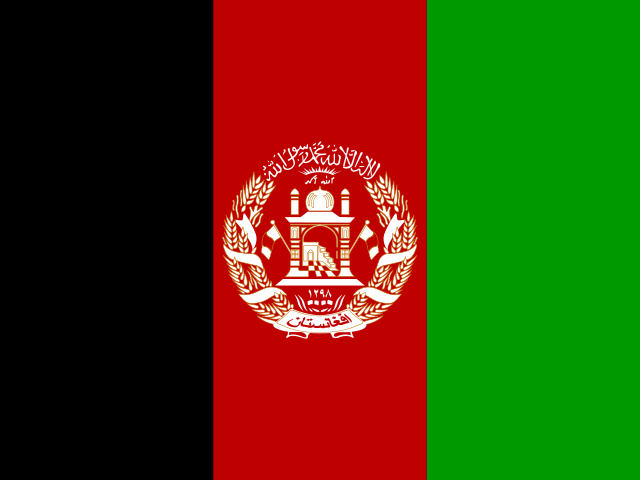 Afghanistan Afghanistan | Kabul |
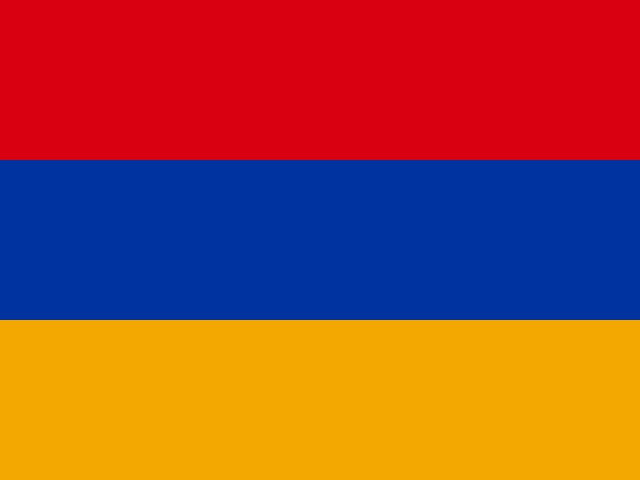 Armenia Armenia | Yerevan |
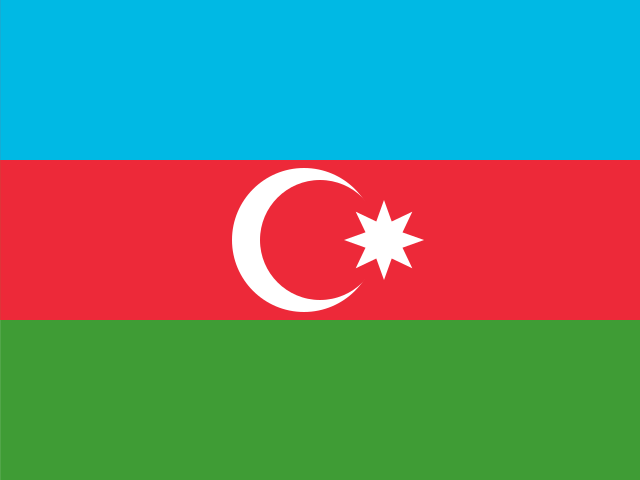 Azerbaijan Azerbaijan | Baku |
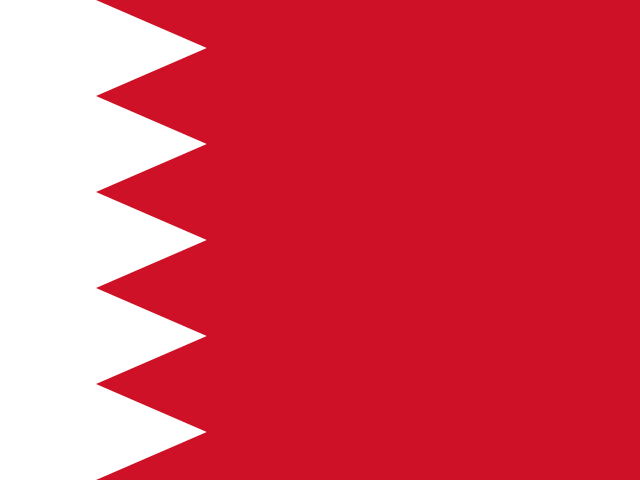 Bahrain Bahrain | Manama |
 Bangladesh Bangladesh | Dhaka |
 Bhutan Bhutan | Thimphu |
 Brunei Brunei | Bandar Seri Begawan |
 Cambodia Cambodia | Phnom Penh |
 China China | Beijing |
 Georgia Georgia | Tbilisi |
 Hong Kong Hong Kong | City of Victoria |
 India India | New Delhi |
 Indonesia Indonesia | Jakarta |
 Iran Iran | Tehran |
 Iraq Iraq | Baghdad |
 Israel Israel | Jerusalem |
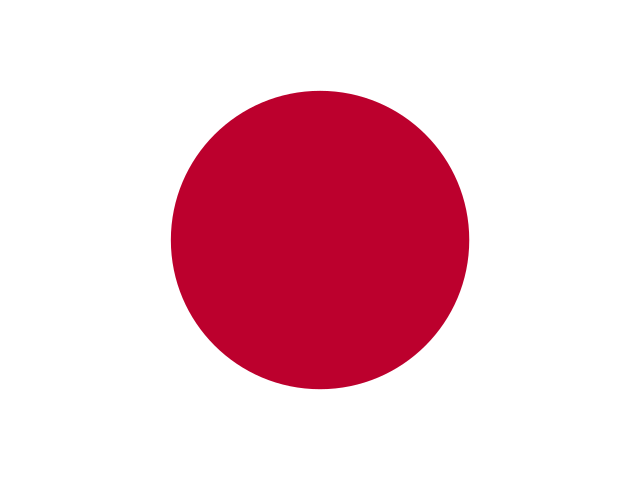 Japan Japan | Tokyo |
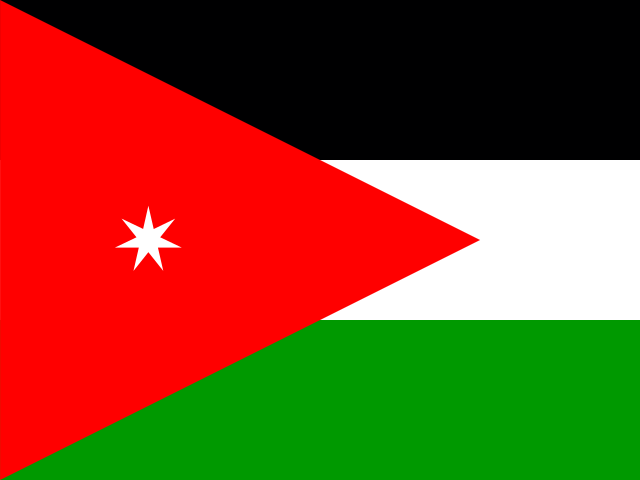 Jordan Jordan | Amman |
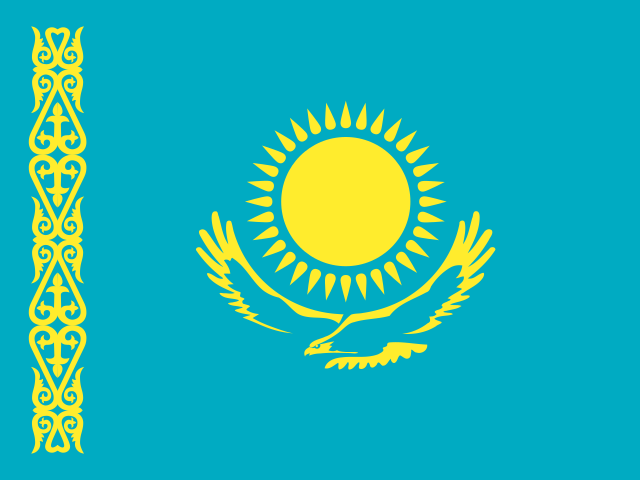 Kazakhstan Kazakhstan | Astana |
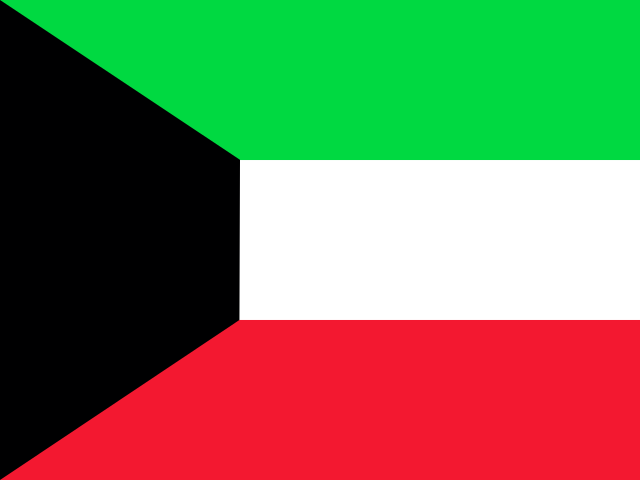 Kuwait Kuwait | Kuwait City |
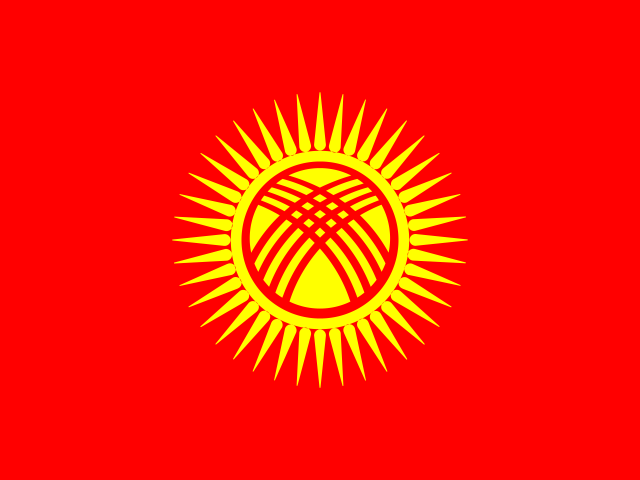 Kyrgyzstan Kyrgyzstan | Bishkek |
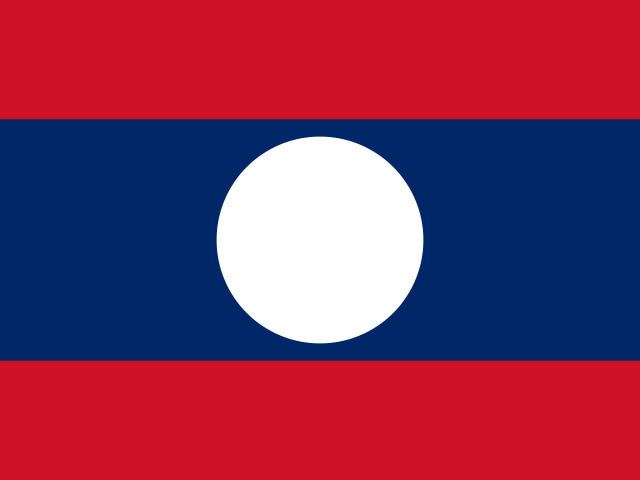 Laos Laos | Vientiane |
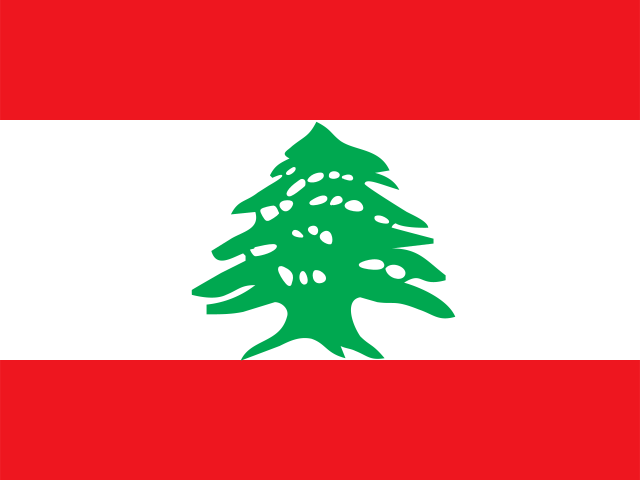 Lebanon Lebanon | Beirut |
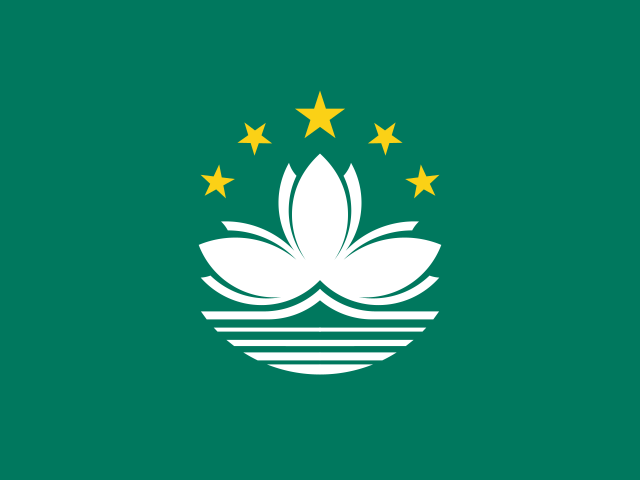 Macau Macau | — |
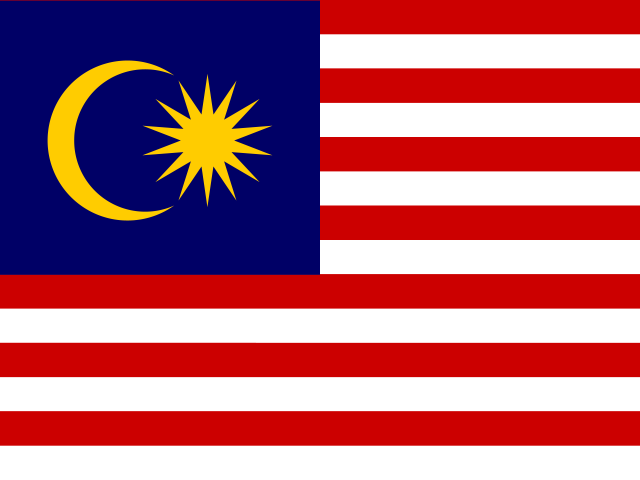 Malaysia Malaysia | Kuala Lumpur |
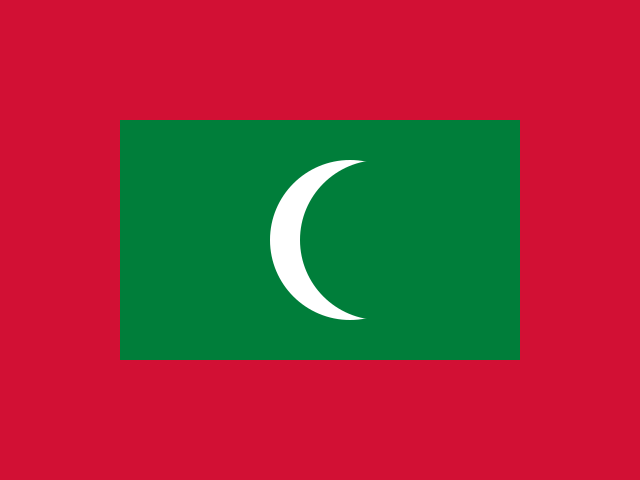 Maldives Maldives | Malé |
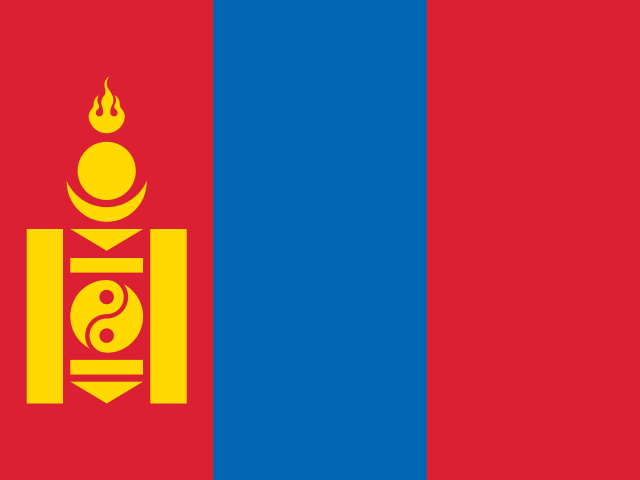 Mongolia Mongolia | Ulan Bator |
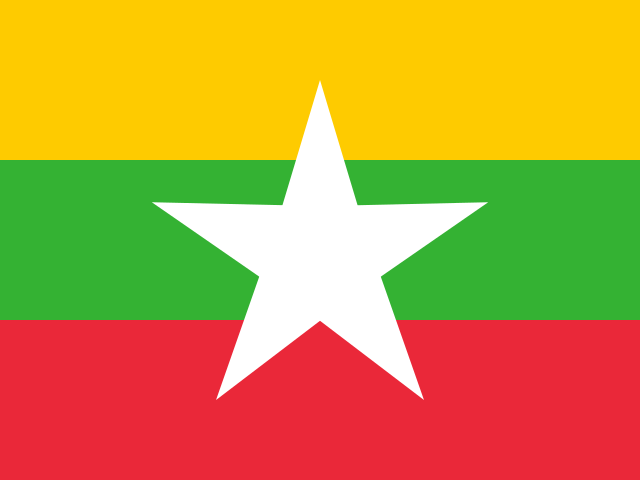 Myanmar Myanmar | Naypyidaw |
 Nepal Nepal | Kathmandu |
 North Korea North Korea | Pyongyang |
 Oman Oman | Muscat |
 Pakistan Pakistan | Islamabad |
 Palestine Palestine | Ramallah |
 Philippines Philippines | Manila |
 Qatar Qatar | Doha |
 Saudi Arabia Saudi Arabia | Riyadh |
 Singapore Singapore | Singapore |
 South Korea South Korea | Seoul |
 Sri Lanka Sri Lanka | Colombo |
 Syria Syria | Damascus |
 Taiwan Taiwan | Taipei |
 Tajikistan Tajikistan | Dushanbe |
 Thailand Thailand | Bangkok |
 Timor-Leste Timor-Leste | Dili |
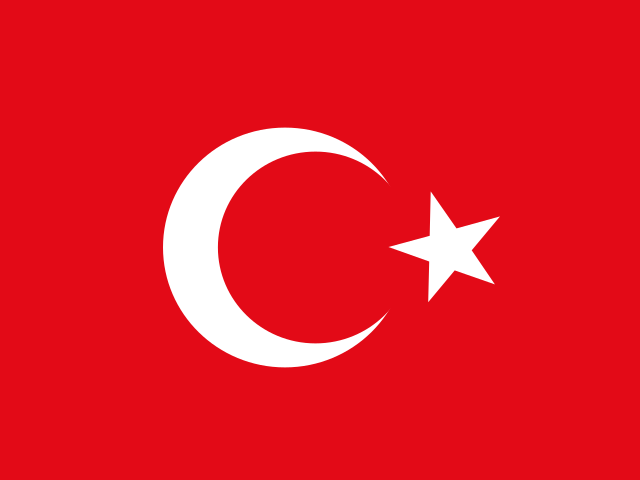 Turkey Turkey | Ankara |
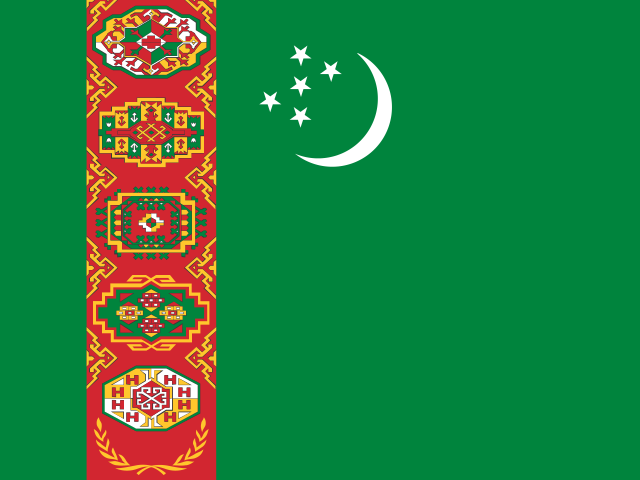 Turkmenistan Turkmenistan | Ashgabat |
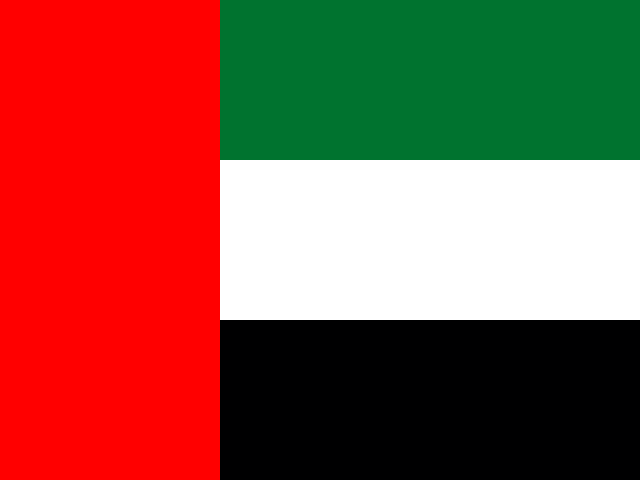 United Arab Emirates United Arab Emirates | Abu Dhabi |
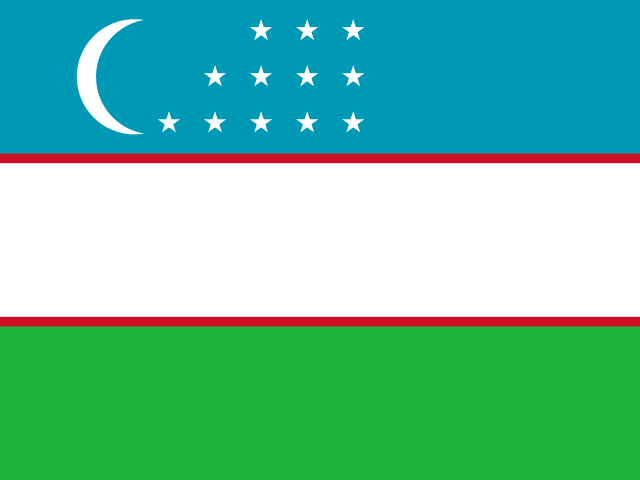 Uzbekistan Uzbekistan | Tashkent |
 Vietnam Vietnam | Hanoi |
 Yemen Yemen | Sana'a |
FAQ
How many countries are in Asia?
There are 48 UN-recognised sovereign countries in Asia. This includes the transcontinental countries Russia (whose capital Moscow is in Europe) and Turkey (whose capital Ankara is in Asia). Some definitions include the Middle Eastern countries in Asia, while others treat them as a separate region. Our page covers the full UN list for Asia.
What is the largest capital city in Asia?
Tokyo, Japan, is the largest metropolitan area in Asia and the world, with a population of over 37 million in the Greater Tokyo Area. It is followed by Delhi (over 30 million), Jakarta (over 30 million), Seoul (over 25 million), and Shanghai (over 25 million), though Shanghai is not the capital — Beijing is.
Which Asian capitals are not the largest city in their country?
Several Asian capitals follow the pattern seen on other continents: Putrajaya/Kuala Lumpur (Malaysia), where the administrative capital is separate from the largest city. Colombo is Sri Lanka's largest city, but the official capital is Sri Jayawardenepura Kotte, a suburb of Colombo. Islamabad is Pakistan's capital, but Karachi is the largest city. Naypyidaw replaced Yangon as Myanmar's capital in 2005.
Which Asian capital was built most recently?
Naypyidaw, Myanmar, is the most recently built capital in Asia — construction began in the early 2000s and the government relocated in 2005 and 2006. Putrajaya (Malaysia) was also recently built, becoming the administrative centre in 1999. Astana (Kazakhstan) was extensively rebuilt after becoming the capital in 1997.
How can I memorise Asian capitals by region?
The most effective strategy is to learn Asia in four groups: East Asia (6 countries), Southeast Asia (11 countries), South Asia (7 countries), and Central/West Asia (which overlaps with the Middle East list). Learn one group per day using active recall — our timed quiz lets you filter by region for targeted practice.
Is Singapore a capital city?
Singapore is a city-state — it is both a country and its own capital. There is no separate capital city. This makes Singapore one of only a handful of countries worldwide where the city and the state are identical.
More geography quizzes
Ready to test yourself?
Start the Capital Cities of Asia quiz →