
Games / Middle East & Central Asia Capitals
Middle East & Central Asia Capitals Quiz
The Middle East and the Central Asian "stans" hold some of the world's trickiest capitals to recall. Here is the full list with capitals — then test yourself against the clock.
Last updated July 2026
Why the Middle East and Central Asia Belong Together
This list groups the Middle East with the five Central Asian "stans" because, geographically and historically, they form a connected belt. From Turkey in the west to Kyrgyzstan in the east, this is the territory of the ancient Silk Road — a corridor of trade, empire, and cultural exchange that operated for over a millennium.
The shared history means the region's capitals tell a story. Ankara was rebuilt as Atatürk's modern capital in the 1920s. Astana (renamed and renamed again) is Kazakhstan's purpose-built seat of government. Riyadh grew from a small desert settlement to a metropolis of 7 million. Learning the capitals is a way into that history.
The Central Asian "Stan" Capitals: A Memory System
The five Central Asian capitals are the hardest part of this list for most people. Here is a simple way to lock them in:
Kazakhstan → Astana — Kazakhstan is the largest "stan" by area. Astana means "capital" in Kazakh — so the capital is literally called "capital."
Uzbekistan → Tashkent — Uzbekistan is the most populous Central Asian country. Tashkent is the largest city in the region by population. "Task" + "kent" (kent means city) — the task city.
Turkmenistan → Ashgabat — Ashgabat is famous for its white marble buildings. The name means "city of love" in Persian. Think "Ash" (white) + "gabat" (love).
Tajikistan → Dushanbe — Dushanbe means "Monday" in Tajik — it grew from a Monday market. "Du-shan-be" sounds like "two-shop-day."
Kyrgyzstan → Bishkek — Bishkek was named after a churn used to make kumis (fermented mare's milk). The sound — Bishkek — is distinctive enough that repeating it three times usually locks it in.
Gulf Capitals: Modern Cities with Deep Roots
The Gulf Arab capitals — Riyadh (Saudi Arabia), Muscat (Oman), Abu Dhabi (UAE), Doha (Qatar), Manama (Bahrain), and Kuwait City (Kuwait) — are among the world's fastest-growing cities. Most were modest fishing or pearl-diving towns until the mid-20th century oil boom transformed them into global hubs.
Abu Dhabi and Dubai generate the most confusion. Abu Dhabi is the capital of the UAE, not Dubai. Dubai is the more famous city, but Abu Dhabi holds the political seat and most of the country's oil reserves. This is a common gotcha in any Middle East capitals quiz.
The Middle East and Central Asia span 20 countries from Turkey to Kyrgyzstan. The five Central Asian "stan" capitals — Astana, Tashkent, Ashgabat, Dushanbe, and Bishkek — are the hardest to remember for most people. The Gulf capitals of Riyadh, Abu Dhabi, Doha, and Muscat have grown from fishing towns into modern global cities in less than a century.▶ Start the Middle East & Central Asia Capitals quiz
Quiz tip: The Central Asian "stans" trip people up most: Astana (Kazakhstan), Tashkent (Uzbekistan), Ashgabat (Turkmenistan), Dushanbe (Tajikistan) and Bishkek (Kyrgyzstan).
Countries
20 nations
Oldest capital
Damascus (11,000+ years)
Smallest country
Bahrain (778 km²)
Stan capitals
5 hardest to remember
Capital ≠ biggest
Ankara, Abu Dhabi
The full list (20)
| Country & capital | Capital |
|---|---|
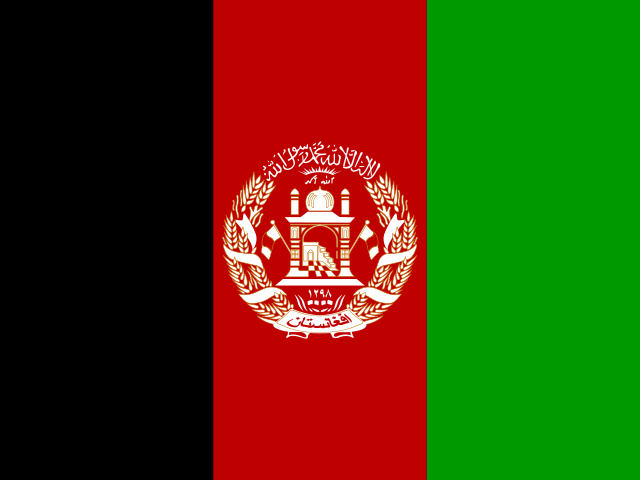 Afghanistan Afghanistan | Kabul |
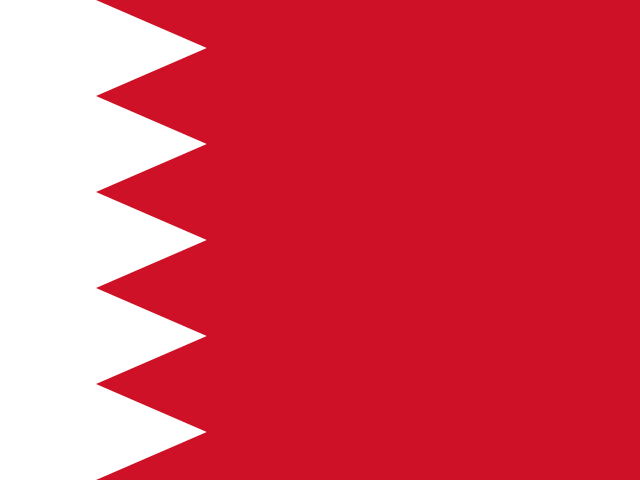 Bahrain Bahrain | Manama |
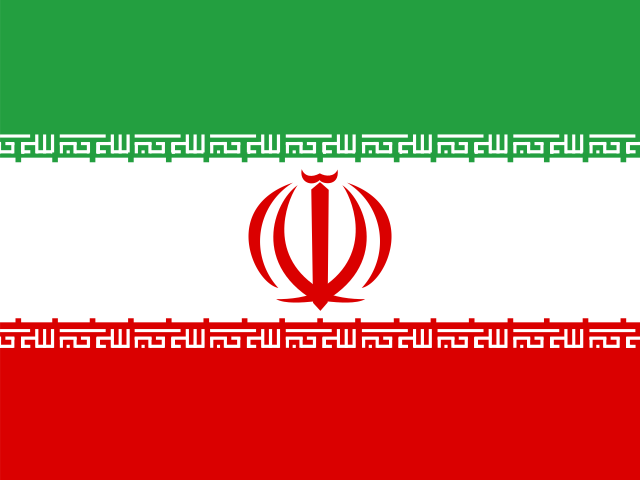 Iran Iran | Tehran |
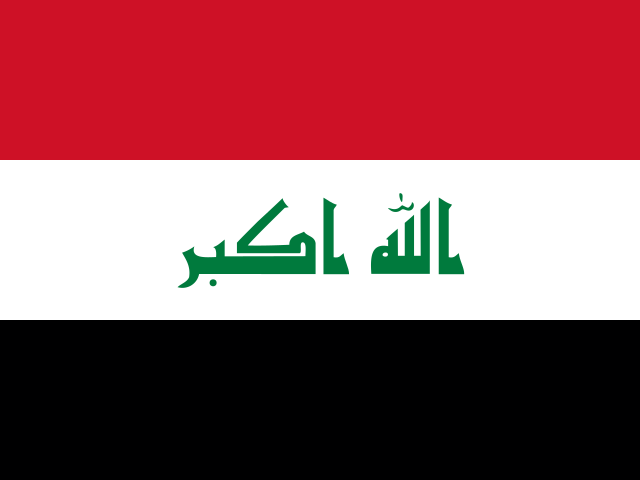 Iraq Iraq | Baghdad |
 Israel Israel | Jerusalem |
 Jordan Jordan | Amman |
 Kazakhstan Kazakhstan | Astana |
 Kuwait Kuwait | Kuwait City |
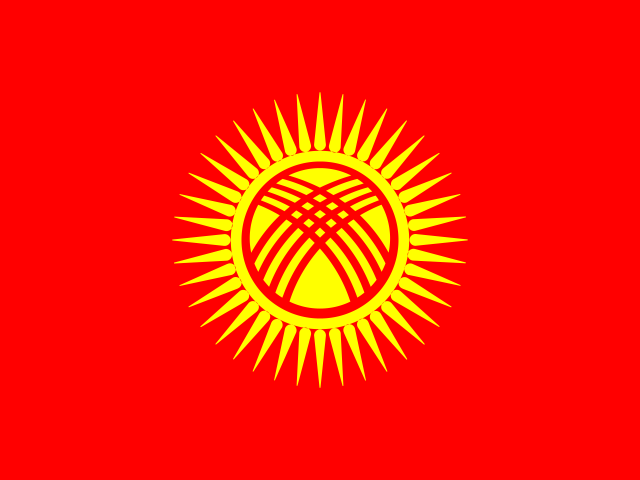 Kyrgyzstan Kyrgyzstan | Bishkek |
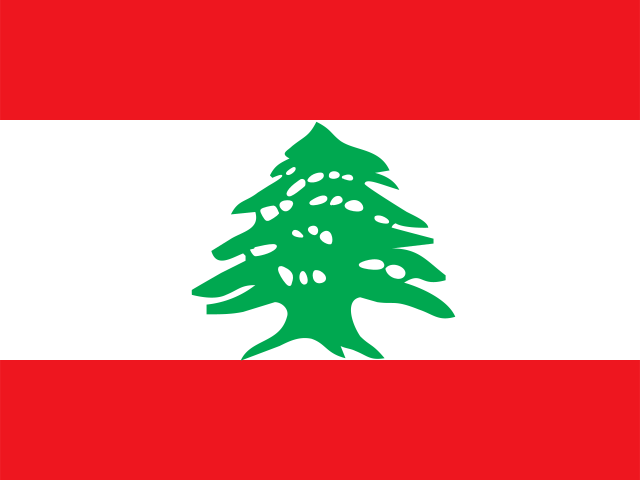 Lebanon Lebanon | Beirut |
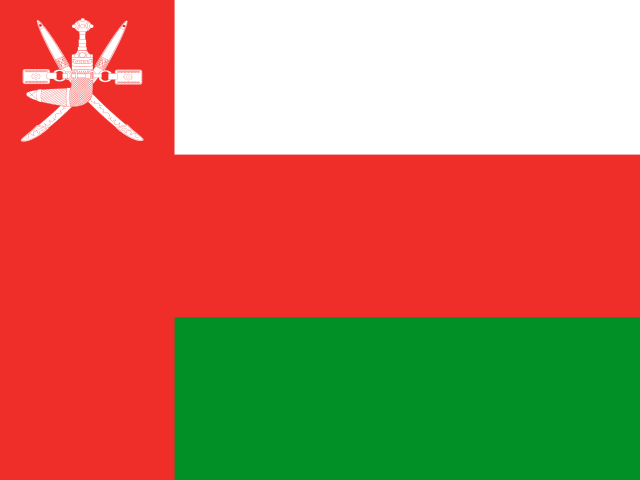 Oman Oman | Muscat |
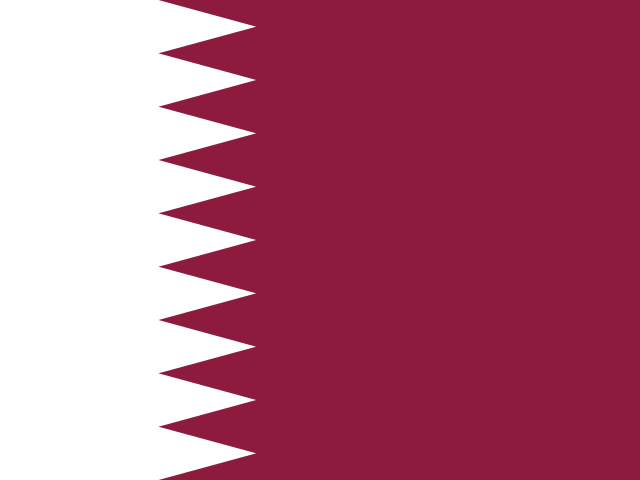 Qatar Qatar | Doha |
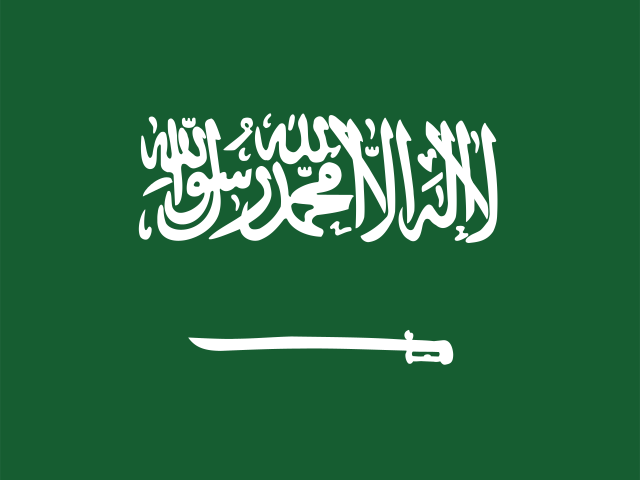 Saudi Arabia Saudi Arabia | Riyadh |
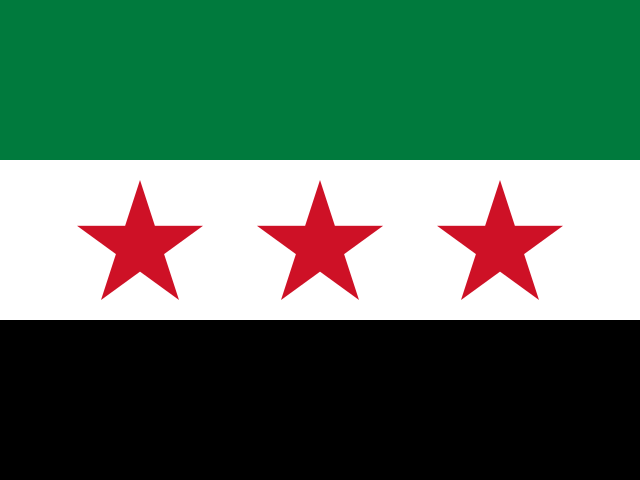 Syria Syria | Damascus |
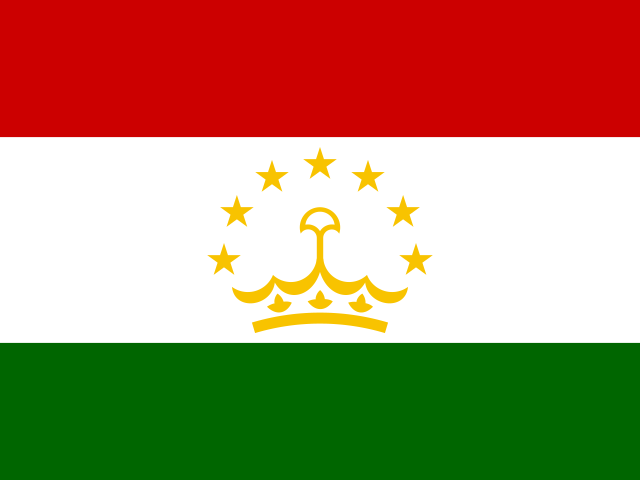 Tajikistan Tajikistan | Dushanbe |
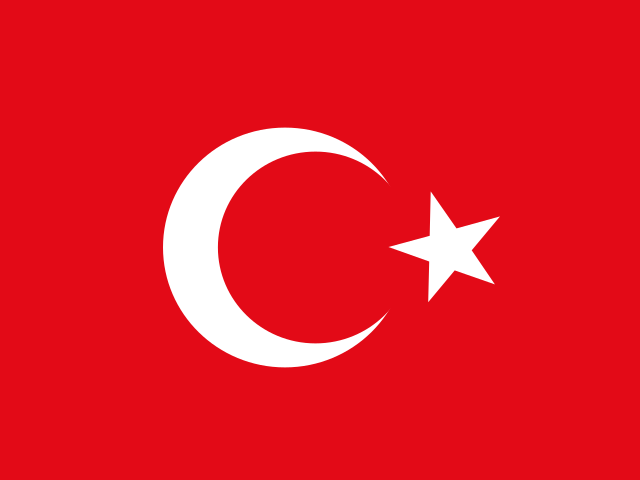 Turkey Turkey | Ankara |
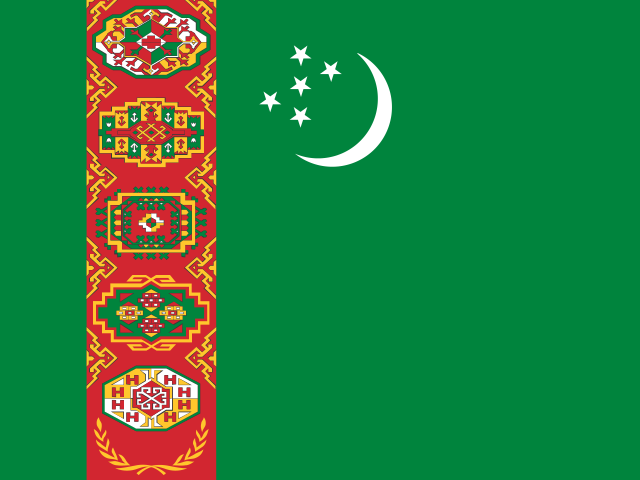 Turkmenistan Turkmenistan | Ashgabat |
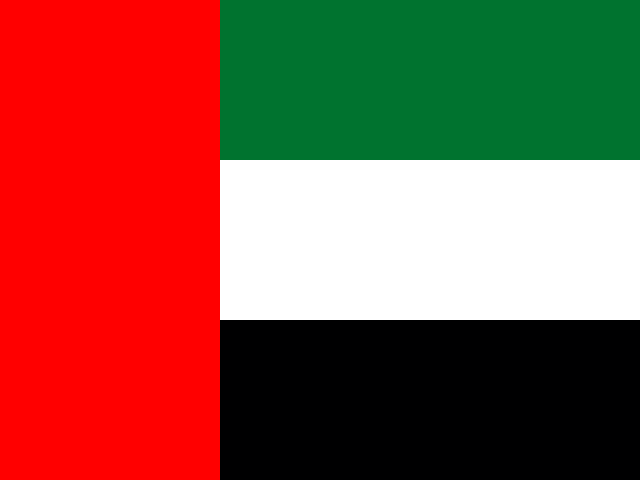 United Arab Emirates United Arab Emirates | Abu Dhabi |
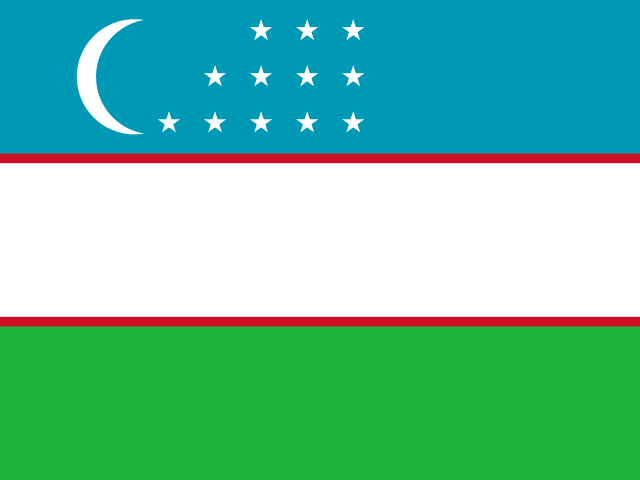 Uzbekistan Uzbekistan | Tashkent |
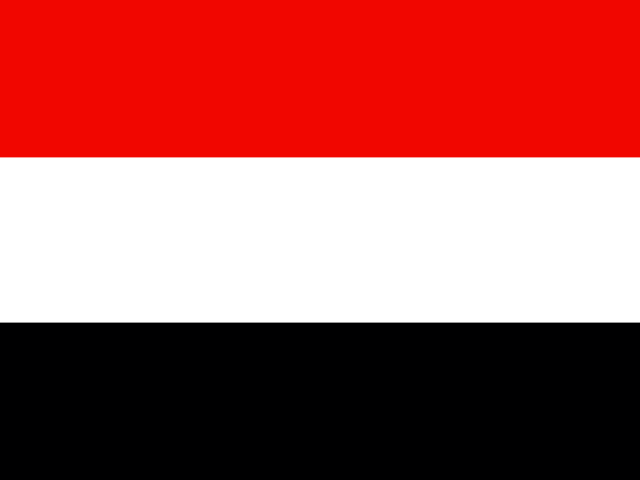 Yemen Yemen | Sana'a |
FAQ
How many countries are in this Middle East and Central Asia list?
This list covers 20 countries: 15 from the Middle East (Turkey, Syria, Lebanon, Jordan, Israel, Iraq, Iran, Saudi Arabia, Yemen, Oman, UAE, Qatar, Bahrain, Kuwait, Afghanistan) and 5 from Central Asia (Kazakhstan, Uzbekistan, Turkmenistan, Tajikistan, Kyrgyzstan). Afghanistan is sometimes grouped with South Asia or Central Asia depending on the definition.
What is the oldest capital city in this region?
Damascus (Syria) is widely regarded as one of the oldest continuously inhabited cities in the world, with evidence of settlement dating back over 11,000 years. Jerusalem, Beirut, and Ankara also have ancient roots stretching back thousands of years.
Which capitals in the Middle East were purpose-built?
Several capitals in the region were purpose-built or heavily redesigned. Ankara replaced Istanbul as Turkey's capital in 1923. Astana replaced Almaty as Kazakhstan's capital in 1997. Riyadh grew from a small settlement into a planned capital. Abu Dhabi was deliberately developed as the UAE capital after the federation in 1971.
What is the smallest country on this list?
Bahrain is the smallest country in the Middle East by area, covering just 778 square kilometres — smaller than New York City. Its capital is Manama. Qatar and Kuwait are also among the smaller countries in the region.
Is it hard to learn Middle Eastern capitals?
Most people find the Central Asian "stans" — Astana, Tashkent, Ashgabat, Dushanbe, Bishkek — the hardest part of this list because they are less familiar in Western media. The Gulf capitals (Doha, Abu Dhabi, Muscat) and well-known cities (Ankara, Jerusalem, Baghdad, Tehran, Riyadh) tend to come more easily. Using the timed quiz with active recall is the fastest way to drill the full set.
Which country in this list has no official capital?
To our knowledge, all 20 countries on this list have an official capital city. However, some have complex administrative arrangements, and a few capitals are not the largest city in their country (for example, Ankara is smaller than Istanbul, and Abu Dhabi is smaller than Dubai in terms of metropolitan population).
More geography quizzes
Ready to test yourself?
Start the Middle East & Central Asia Capitals quiz →