Games / Capital Cities of Europe
Capital Cities of Europe Quiz
From Reykjavík to Athens, Europe packs dozens of nations — and capitals — into a small area. Below is the complete list of European countries with their capital cities, followed by a free, timed quiz to lock them into memory.
Last updated July 2026
Why Learn the Capital Cities of Europe?
Europe has more countries per square kilometre than any other continent. With roughly 50 sovereign nations packed into an area about the size of Canada, the map is remarkably dense — and so is the list of capitals you need to keep straight.
Knowing European capitals matters beyond trivia. Europe is the most visited region on Earth: Paris, London, Rome, Barcelona, and Amsterdam draw hundreds of millions of tourists every year. Whether you are planning a trip, following geopolitics, or helping a child with homework, having the capitals at your fingertips is genuinely useful.
European Capitals by Region
The easiest way to learn European capitals is to tackle them in geographic groups rather than trying to memorise all at once:
Nordic — Helsinki (Finland), Stockholm (Sweden), Oslo (Norway), Copenhagen (Denmark), Reykjavík (Iceland). These five are relatively straightforward once you link each capital to its country.
Western Europe — Paris, London, Brussels, Amsterdam, Berlin, Vienna, Bern, Luxembourg. This group contains the continent's most famous capitals, but Bern (Switzerland) is a common trap — most people guess Zurich.
Southern Europe — Rome, Madrid, Lisbon, Athens, Valletta, San Marino, Vatican City, Andorra la Vella, Ljubljana, Zagreb, Sarajevo, Podgorica, Tirana, Skopje. The microstates — San Marino, Vatican City, Andorra, and Malta — are where most people slip up.
Central and Eastern Europe — Warsaw, Prague, Bratislava, Budapest, Bucharest, Sofia, Belgrade, Chisinau, Kyiv, Minsk, Moscow, Tallinn, Riga, Vilnius. Many of these capitals share architectural and historical ties from the Austro-Hungarian and Soviet eras.
Memory Tricks for the Trickiest European Capitals
A handful of European capitals reliably trip people up. Here is how to lock them in:
Vaduz (Liechtenstein) — Liechtenstein is so small you could miss it on a map. Vaduz rhymes roughly with "that's" — "That's Vaduz, the tiny capital."
Andorra la Vella (Andorra) — Andorra sits high in the Pyrenees. La Vella means "the old" in Catalan — think of the old, elevated city.
Valletta (Malta) — Malta is a small island nation in the Mediterranean. Valletta was named after the Grand Master of the Knights Hospitaller — associating it with "valour" helps.
Bern (Switzerland) — Zurich is bigger and more famous, but Bern is the political centre. Remember: "B" is for Bern, "B" is for the Bundesrat (the federal council).
Ljubljana (Slovenia) — The "lj" sound is unusual in English. Break it into "Lyu-blyah-nah" and repeat it three times.
Europe has 44 sovereign countries and just as many capital cities. The smallest is Vatican City, the highest is Andorra la Vella at 1,023 metres, and the ones most people forget are Vaduz (Liechtenstein), San Marino, and Valletta (Malta).▶ Start the Capital Cities of Europe quiz
Quiz tip: The small states catch most people out: Vaduz (Liechtenstein), San Marino, Andorra la Vella and Valletta (Malta) are the European capitals most often forgotten.
Countries
44 sovereign nations
Smallest capital
Vatican City (0.49 km²)
Highest capital
Andorra la Vella (1,023 m)
Microstate trap
Vaduz, San Marino, Valletta
Not the biggest
Bern, Valletta, Ankara
The full list (53)
| Country & capital | Capital |
|---|---|
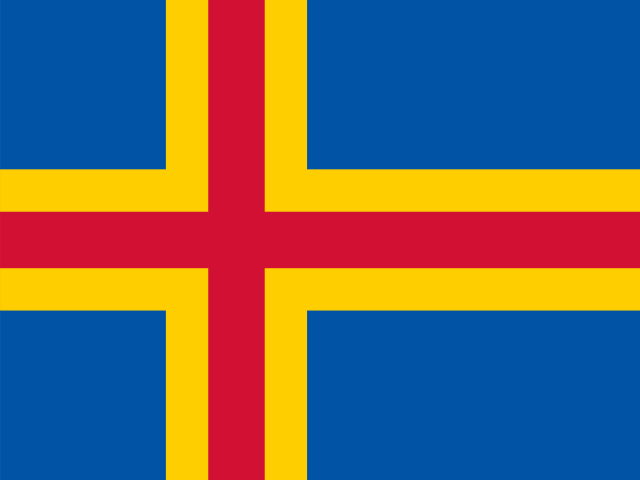 Åland Islands Åland Islands | Mariehamn |
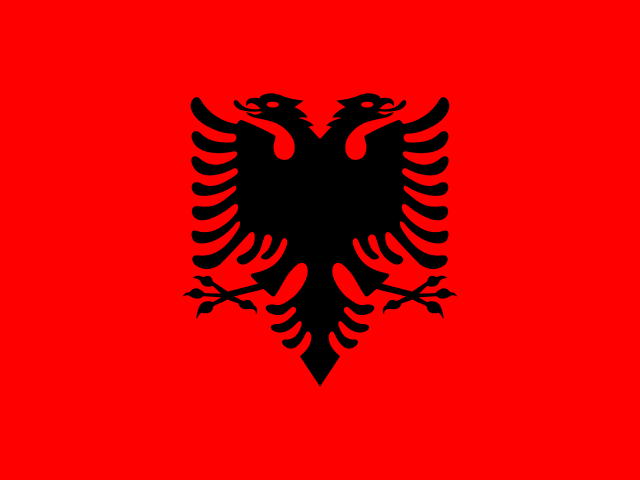 Albania Albania | Tirana |
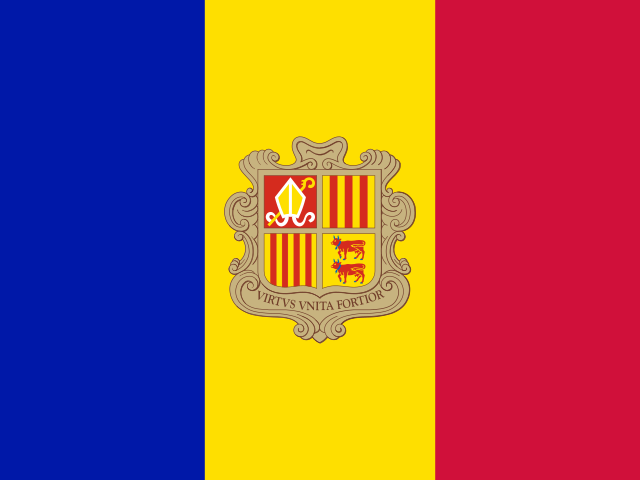 Andorra Andorra | Andorra la Vella |
 Austria Austria | Vienna |
 Belarus Belarus | Minsk |
 Belgium Belgium | Brussels |
 Bosnia and Herzegovina Bosnia and Herzegovina | Sarajevo |
 Bulgaria Bulgaria | Sofia |
 Croatia Croatia | Zagreb |
 Cyprus Cyprus | Nicosia |
 Czechia Czechia | Prague |
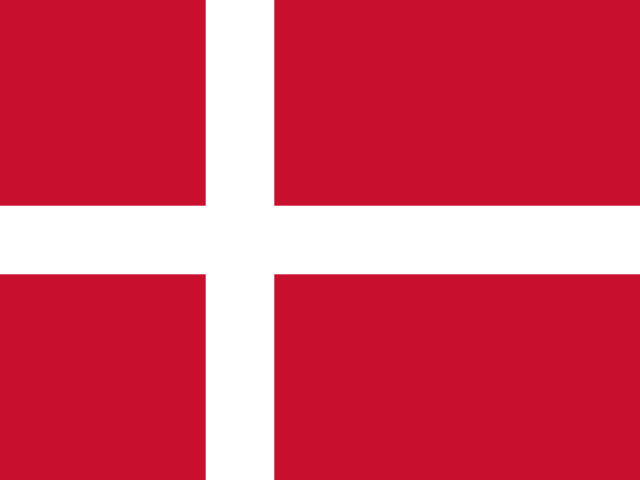 Denmark Denmark | Copenhagen |
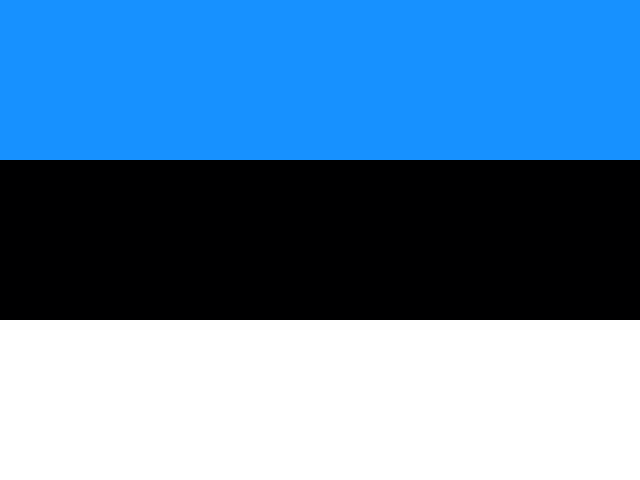 Estonia Estonia | Tallinn |
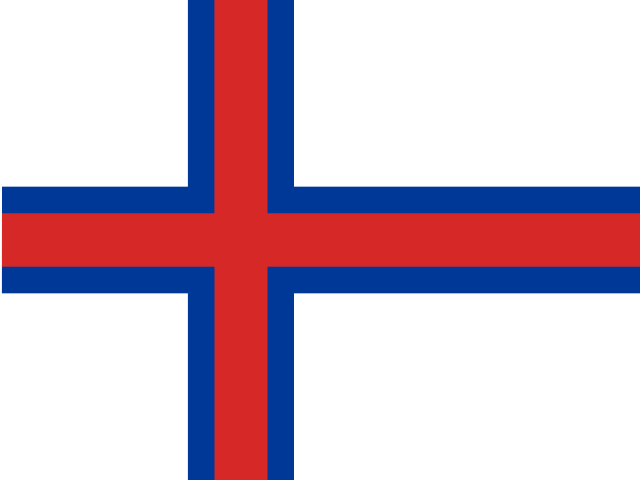 Faroe Islands Faroe Islands | Tórshavn |
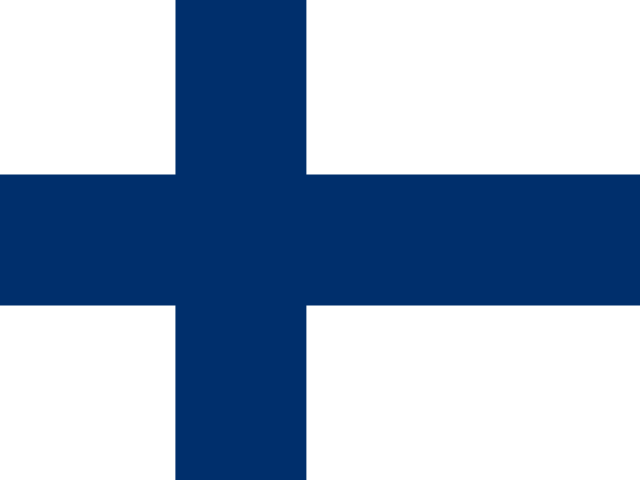 Finland Finland | Helsinki |
 France France | Paris |
 Germany Germany | Berlin |
 Gibraltar Gibraltar | Gibraltar |
 Greece Greece | Athens |
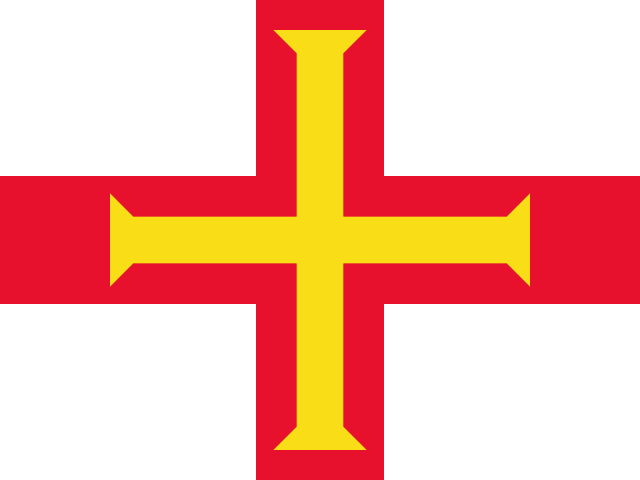 Guernsey Guernsey | St. Peter Port |
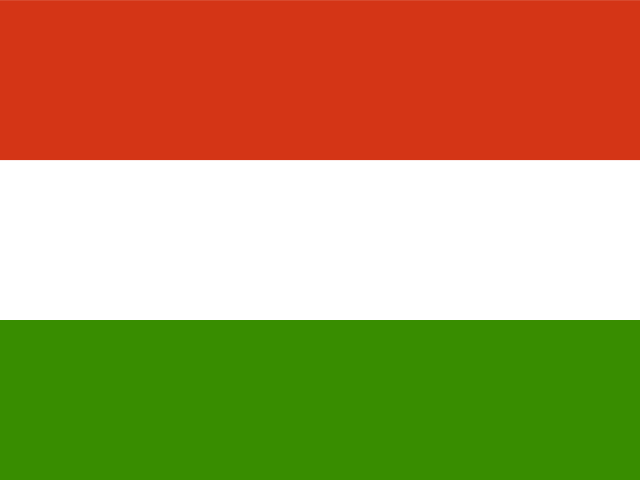 Hungary Hungary | Budapest |
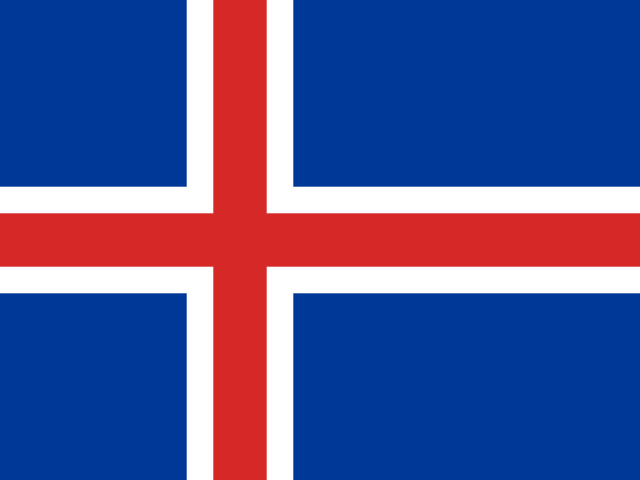 Iceland Iceland | Reykjavik |
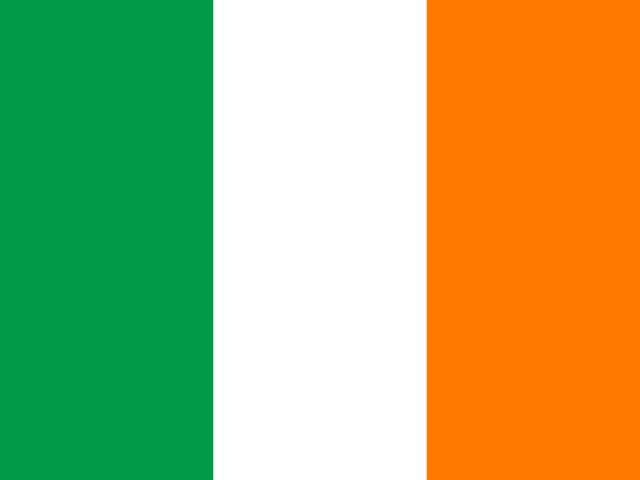 Ireland Ireland | Dublin |
 Isle of Man Isle of Man | Douglas |
 Italy Italy | Rome |
 Jersey Jersey | Saint Helier |
 Kosovo Kosovo | Pristina |
 Latvia Latvia | Riga |
 Liechtenstein Liechtenstein | Vaduz |
 Lithuania Lithuania | Vilnius |
 Luxembourg Luxembourg | Luxembourg |
 Malta Malta | Valletta |
 Moldova Moldova | Chișinău |
 Monaco Monaco | Monaco |
 Montenegro Montenegro | Podgorica |
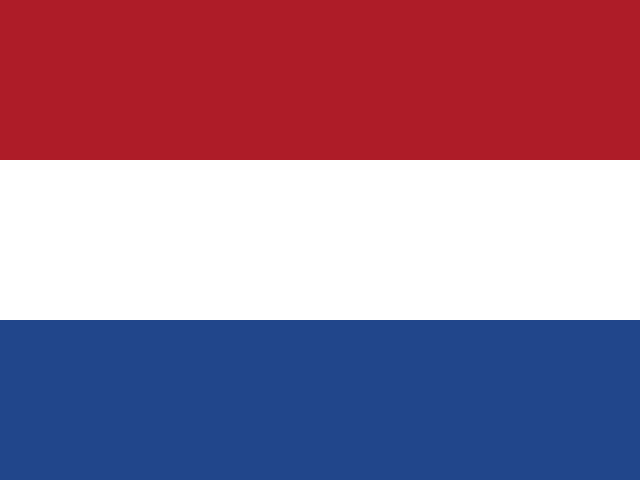 Netherlands Netherlands | Amsterdam |
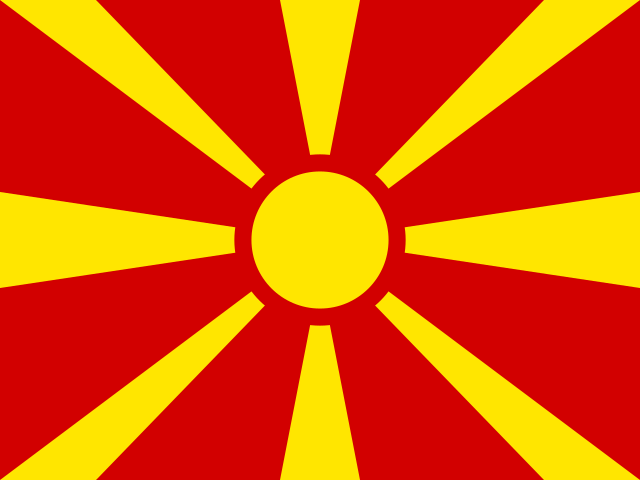 North Macedonia North Macedonia | Skopje |
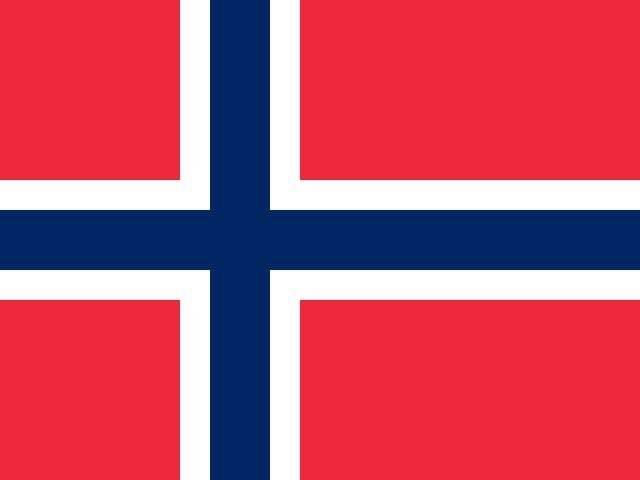 Norway Norway | Oslo |
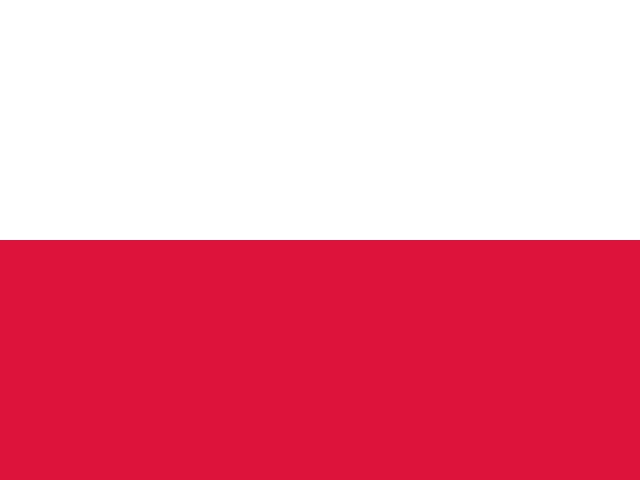 Poland Poland | Warsaw |
 Portugal Portugal | Lisbon |
 Romania Romania | Bucharest |
 Russia Russia | Moscow |
 San Marino San Marino | City of San Marino |
 Serbia Serbia | Belgrade |
 Slovakia Slovakia | Bratislava |
 Slovenia Slovenia | Ljubljana |
 Spain Spain | Madrid |
 Svalbard and Jan Mayen Svalbard and Jan Mayen | Longyearbyen |
 Sweden Sweden | Stockholm |
 Switzerland Switzerland | Bern |
 Ukraine Ukraine | Kyiv |
 United Kingdom United Kingdom | London |
 Vatican City (Holy See) Vatican City (Holy See) | Vatican City |
FAQ
How many capital cities are there in Europe?
There are 44 sovereign countries in Europe according to the United Nations, each with its own capital. Several microstates — Vatican City, San Marino, Monaco, Andorra, Liechtenstein, and Malta — are included in this count. Russia and Turkey are transcontinental countries whose capitals (Moscow and Ankara) fall within Europe.
What is the smallest European capital city?
Vatican City is the smallest capital in Europe and the smallest in the world, with an area of less than half a square kilometre and a population under 1,000. San Marino and Valletta (Malta) are also among the smallest capitals by both area and population.
Which European capital is located at the highest altitude?
Andorra la Vella, the capital of Andorra, sits at 1,023 metres (3,356 feet) above sea level, making it the highest capital in Europe. It is nestled in the Pyrenees mountain range between France and Spain.
Which European capitals are not the largest city in their country?
Several European capitals are not the largest city by population. Bern (Switzerland) is smaller than Zurich. Valletta (Malta) is smaller than Birkirkara. Even within larger countries, the capital is not always the biggest: Ankara is smaller than Istanbul, and Rome is smaller than Milan by metropolitan population in some measures.
How can I memorise all European capitals quickly?
The fastest method is active recall — trying to retrieve the capital from memory rather than re-reading a list. Our free timed quiz forces you to do exactly that: you see a country name and must pick the correct capital from four options under a 9-second timer. Repeating this a few times is far more effective than staring at a list.
Are there any European countries with more than one capital?
No European country has multiple official capitals. However, some have de facto administrative splits. The Netherlands' capital is Amsterdam, but the government sits in The Hague. Switzerland has Bern as its federal city, though it is not formally called a capital.
More geography quizzes
Ready to test yourself?
Start the Capital Cities of Europe quiz →