Guess the Flag Online: Best Free Games to Test Your Skill
October 8, 2026 · 8 min read · updated October 8, 2026
Guess the Flag Online: Best Free Games to Test Your Knowledge
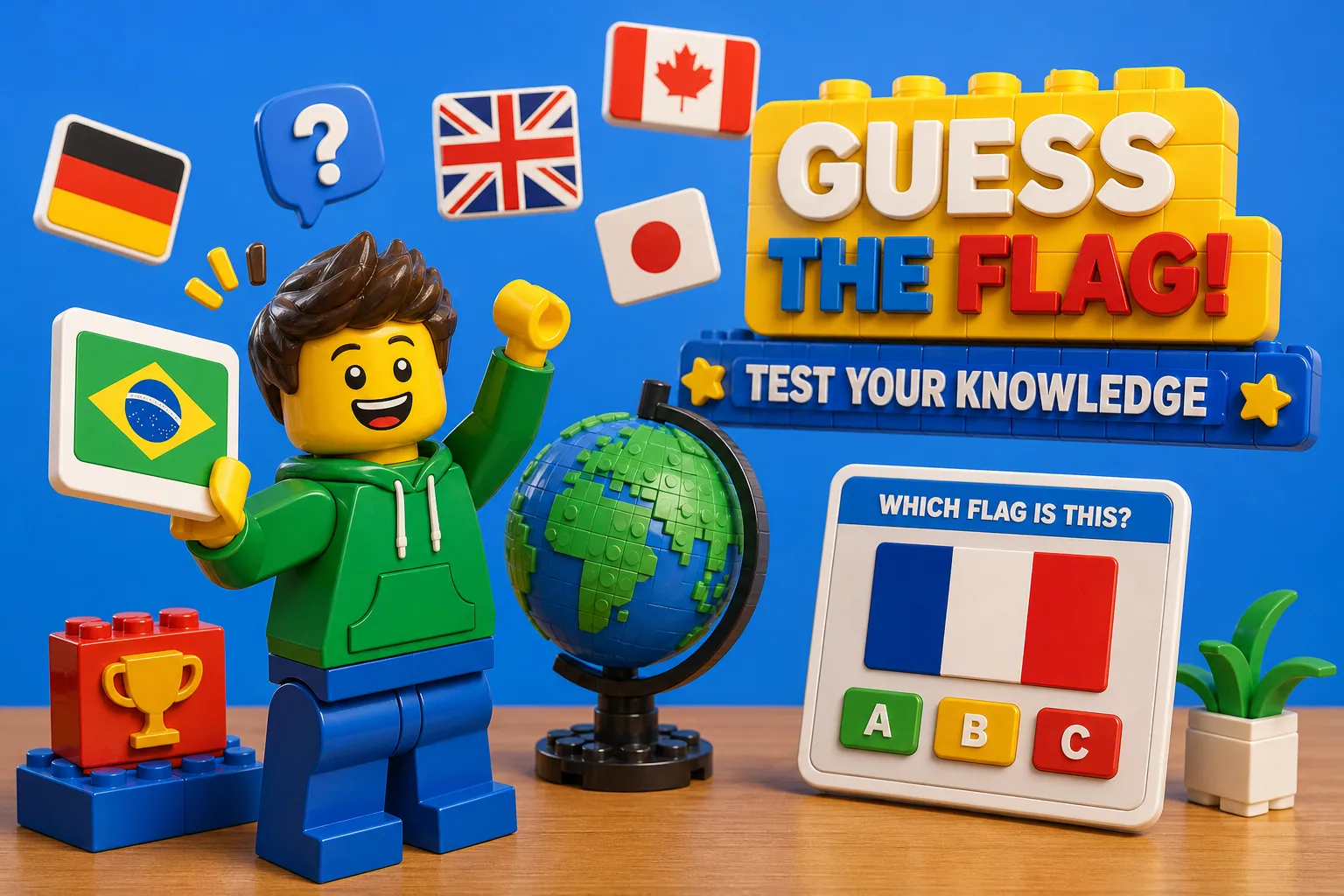
If you want to guess the flag online, you've probably already discovered that most quizzes cover only 195 or 197 countries. This article tells you exactly what to expect when you sit down with a world flags quiz: the two formats you'll encounter, how difficulty levels actually work, which sites cover all 250 recognized flags, how multiplayer formats are structured, and a few sharp tips that will make you genuinely better at identifying flags fast. If you want the full set, including territories and dependencies, you need to know where to look.
What Flag Guessing Games Actually Look Like
Almost every flag quiz online uses one of two formats. Multiple choice shows you a flag and gives you four country options to pick from. Type-in shows you a flag and asks you to spell the country name from scratch. Both formats teach, but they teach differently, and knowing the difference before you start saves frustration.
Multiple Choice vs. Type-In: Which One Actually Teaches You More
Multiple choice is friendlier for beginners. You can narrow down the answer by eliminating obvious wrong choices, which means partial knowledge is enough to score points. That feels rewarding early on, but it also means you can pass a quiz without fully locking the information into memory. Type-in forces genuine active recall: you have to retrieve the country name independently, with no options to lean on. Getting the answer wrong first and then seeing the correction, that's the retrieval practice effect, and it produces stronger long-term retention than recognizing an answer from a list. If your goal is to actually remember flags a week from now, type-in formats do more work.
Timed Rounds, Lives, and Streaks: The Mechanics Behind the Game
Regardless of format, many flag quiz games share a core set of mechanics. Timed rounds create just enough pressure to keep you focused without making the game feel punishing, short, quick-fire sessions of a handful of questions are a common format across popular platforms. Lives give you a buffer for mistakes while still raising the stakes. Streaks reward consistency and pull you back for another round when you finally break one. These mechanics are why a flag trivia online session feels like a game rather than a flashcard session, and they're also why the habit builds faster than traditional studying.
How Difficulty Levels Vary Across Flag Quizzes
Difficulty in flag quizzes isn't just about how many flags are included. It's also about what help you're given and how visually similar the flags in the set are. Easy modes typically stick to a small set of the most globally familiar flags, the United States, Japan, Canada, Brazil, France. You'll recognize most of them on sight, and that's the point. Building pattern recognition on familiar flags makes harder sets less overwhelming later.
Beginner Flag Sets: The Flags Almost Everyone Gets Right
Starting on an easy set isn't wasted time. It trains your eye to read flag structure quickly: stripe direction, color order, symbols in the corner or center. Those reading habits carry directly into harder sets. Many platforms organize their beginner mode around high-recognition flags to encourage early engagement and give new players a foothold before the difficulty ramps up. Jumping straight to hard mode before you've built those visual habits is a common stumbling block for new players.
Hard Modes and Obscure Flags: What "Near-Impossible" Really Means
A truly hard identify-the-flag game pulls from the full roster of world flags rather than just sovereign states, adding territories, dependencies, and disputed regions. It removes hints and multiple choice options entirely, requiring typed recall. And it loads the question set with look-alike pairs: Chad and Romania share near-identical vertical tricolors, Indonesia and Monaco both use red over white, and Norway and Iceland are essentially reversed versions of the same Nordic cross design. Hard mode on platforms like GeoGames removes multiple choice entirely. The difficulty isn't that the flags are impossible to learn. It's that low prior exposure and high visual similarity hit you at the same time, under a timer, with no options to fall back on.
Where to Guess the Flag Online: What Separates Good Sites from the Rest
Several factors determine whether a flag quiz site is worth your time: coverage, format flexibility, and friction. Coverage means how many flags the site actually includes. Format flexibility means you can switch between difficulty levels, question types, and regions without leaving the site. Friction means anything that slows you down before you start, required accounts, mandatory app downloads, paywalls, or student data collection forms.
What to Check Before You Commit to a Site
Before settling into a platform, run through a quick checklist. How many flags does it actually cover? A site advertising "195 countries" doesn't include territories and dependencies, which is where some of the most interesting and challenging flags live. Does it offer both multiple choice and type-in formats? Can you adjust the region or difficulty, or is it one fixed quiz? And does it work on your phone in a browser without an app download? Those filters cut the list fast.
Platforms That Cover All 250 World Flags
DodoThinks is built specifically for players who want to guess the flag online across the complete set of recognized countries and territories. Its flag marathon mode runs through all 250 world flags across four difficulty tiers, from accessible beginner sets to a near-impossible mode that strips away hints and stacks the queue with confusable look-alikes, all in a browser with no account required. For anyone who wants to run a full country flags quiz without bouncing between multiple platforms, DodoThinks handles it in one place.
Multiplayer Flag Games: How They Work and Who They're For
Solo play builds knowledge. Multiplayer makes you use it under real pressure. Most flag quiz multiplayer formats split into two types: party rooms, where a host creates a shared session and everyone answers the same flag simultaneously, and 1v1 matches, where two players race to identify flags first. Party rooms work well for classrooms, game nights, or study groups. Head-to-head formats are better for competitive players who want to sharpen their speed.
Party Rooms vs. 1v1 Matches: Which Format Fits Your Group
Party rooms scale up well. Flags.Games supports up to 40 players in a browser room using a six-character code, with correct answers scoring 100 points and speed bonuses up to 30 points for especially fast answers. Chiby.io handles up to 20 players using a similar host-and-share-link setup. Both work without accounts. For direct head-to-head play, Flagzio runs 1v1 matches where the first player to correctly identify a flag claims the point. Geography Games offers a two-player private lobby format where the first player to reach five points wins. These are genuinely different experiences: party rooms reward broad knowledge across a group, while 1v1 matches reward speed and precision.
Account-Free Multiplayer Options Worth Knowing
The account requirement is the real barrier for classroom use and casual meetups. Chiby.io, Flags.Games, and Geography Games all let you join a session with a shared link or code and a nickname, no registration needed. That zero-friction access matters when you want to run a quick competitive round at the start of class or challenge someone during a lunch break without a five-minute setup process. DodoThinks follows the same principle, letting you dive into a multiplayer flag game without either player needing to create an account first.
Tips That Will Actually Improve Your Flag Recognition
The biggest mistake players make is passive review: scrolling through a flags gallery and assuming the exposure counts as studying. It doesn't. Familiarity and memory are not the same thing. What actually builds durable recall is retrieval practice, attempting to identify the flag before you see the answer, making a genuine guess, and then learning from the result whether you were right or wrong.
Study by Region, Not by Random Shuffle
Grouping flags by continent or region makes individual flags easier to separate and remember. West African flags frequently use Pan-African colors (green, gold, and red), so the key learning task becomes recognizing stripe direction and distinguishing emblems: Senegal adds a central green star, Mali has none, Ghana uses horizontal bands while Guinea uses vertical ones. Scandinavian flags share the Nordic cross pattern, so once you know the shape, you're only learning which color combination belongs to which country. This approach turns isolated memorization into pattern comparison, which is faster and sticks longer.
Use Wrong Answers as the Actual Learning Moment
Missing a flag is not a setback. It's the most useful moment in the session. The surprise of being wrong, combined with seeing the correct answer immediately after, creates a stronger memory trace than simply reviewing the correct answer from the start. When you see Chad's flag and confidently answer Romania, then find out you were wrong, that correction sticks far harder than a flag you already know. Lean into wrong answers rather than trying to avoid them. They're doing more learning work than the easy ones.
Daily Puzzles and Short Rounds: The Habit That Compounds
Two-minute daily flag rounds beat sporadic two-hour study sessions for long-term retention. Spaced repetition research consistently shows that brief, regular practice keeps recently learned material active in memory while gradually introducing new items. A short daily touchpoint fits into a commute, a lunch break, or the two minutes before a meeting. The habit doesn't require motivation or scheduling. Over weeks, that consistency compounds into genuine geographic fluency.
Start Where You Are and Work Up
The best flag quiz for you depends on what you actually need right now. Casual daily play calls for a no-account platform with a daily puzzle format. Competitive multiplayer calls for a party room or 1v1 format that handles your group size. Classroom use demands zero friction and no data collection requirements. Deep study calls for full 250-flag coverage with typed recall and region-based organization.
Difficulty matters less than consistency. A player who spends two minutes every day on a flag quiz online and pays attention to wrong answers will outpace someone who does a single hard marathon session once a week. Start at a level that feels challenging but achievable, that's the zone where retrieval practice does the most work, and build from there.
Ready to guess the flag online across the full set of 250 recognized countries and territories? Start with a no-account platform, explore the beginner set first, and step up difficulty as your regional pattern recognition grows. DodoThinks is a clean starting point: no signup, no setup, four difficulty levels, and the complete flag roster waiting when you're ready for them.